
Yes, most of Dorset is under a hosepipe ban: Wessex Water and South West Water. Bournemouth Water has none. The 11 banned uses and the £1,000 fine.
Almost all of Dorset is now under a hosepipe ban. Three water companies supply the county and two of them have restricted hosepipes, the second only in the past week.
- Wessex Water banned hosepipes from 00:01 on Tuesday 18 August 2026, “until further notification”. It is the company’s first restriction in 50 years. Wessex supplies most of the county, including Dorchester, Weymouth, Portland, Bridport, Sherborne, Blandford Forum, Shaftesbury and Swanage. (Wessex Water, statutory notice for temporary ban on water use)
- South West Water banned hosepipes from 00:01 on Saturday 8 August 2026, also until further notice. In Dorset that means the far west corner around Lyme Regis, where the water is treated mainly at Dotton works in East Devon. (South West Water, temporary ban on water use)
- Bournemouth Water has no ban. It says on its own site: “Bournemouth Water does not have a hosepipe ban in place.” It supplies the east of the county, including Bournemouth, Christchurch and the Verwood and Ringwood fringe. (Bournemouth Water)
The test is not where you live but who bills you. If your bill says Wessex Water or South West Water, the ban applies to you today. If it says Bournemouth Water, it does not.
Breaching a ban is a criminal offence under the Water Industry Act 1991, and Wessex Water’s notice spells out the penalty: a fine of up to £1,000 on summary conviction.
What the ban actually stops
Both notices are made under sections 76 and 76A to 76C of the Water Industry Act 1991, and both ban the same eleven uses. A hosepipe includes sprinklers, dripper hoses and automatic irrigation systems. You must not use one for:
- watering a garden
- cleaning a private motor vehicle
- watering plants on domestic or other non-commercial premises
- cleaning a private leisure boat
- drawing water for domestic recreational use
- filling or maintaining a domestic pond
- filling or maintaining a domestic swimming or paddling pool
- filling or maintaining an ornamental fountain
- cleaning the walls or windows of a home
- cleaning paths or patios
- cleaning other artificial outdoor surfaces
Check the legal notice, not the web page. Wessex Water’s own hosepipe ban page lists only nine restricted uses. Its statutory notice lists eleven. The two missing from the web summary are cleaning a private leisure boat and filling or maintaining a domestic pond, and it is the notice that has legal effect.
Both notices are equally clear about what is still allowed. You can do all of those things with a bucket or a watering can, or with water that does not come from the mains, such as a water butt, grey water or a private borehole. Drinking, cooking, showering, washing and flushing are untouched.
There are statutory exceptions that need no application, including using a hosepipe for health and safety reasons, watering plants grown for sale or commercial use, cleaning a public service or goods vehicle, and filling a pond in which fish are kept. Both companies add discretionary exceptions for customers with medical or mobility needs, and for approved drip or trickle irrigation fitted with a pressure reducing valve and a timer.
One point that catches sports clubs out: watering grass used for sport or recreation is covered by the health and safety exception only for the active playing strip, not the whole ground.
Wessex Water takes representations about the ban at hosepipe.ban@wessexwater.co.uk. If it varies any of the terms, it has to publish a further notice.
Why Wessex Water changed its mind in ten days
As recently as mid-August, Wessex Water was still telling customers there was no ban in its region and running a campaign headed “working together to avoid a hosepipe ban”. Demand did not fall, and on 18 August the ban started.
The company now says water resources are “under significant pressure due to prolonged dry weather” and that summer demand has been “significantly higher than normal”. Its own figures show how thin the margin had become:
- 2mm of rainfall across the region in July, 4% of the long-term average for the month
- the last six months at 80% of the long-term average rainfall
- surface reservoir storage at 58% of capacity at the end of July, which the company called average for the time of year
- groundwater below average at its monitoring sites
- demand more than 30% above average, above 400 million litres a day for over 35 consecutive days
Wessex puts that extra demand at the equivalent of almost 4,000 hosepipes running constantly. It says all available resources are going into fixing leaks, that it found and fixed a third more leaks in July than usual, and that it is using its supply grid to move water from areas of surplus to areas of shortage. (Wessex Water, hosepipe ban, water resources)
Water is being pumped into Dorset’s rivers
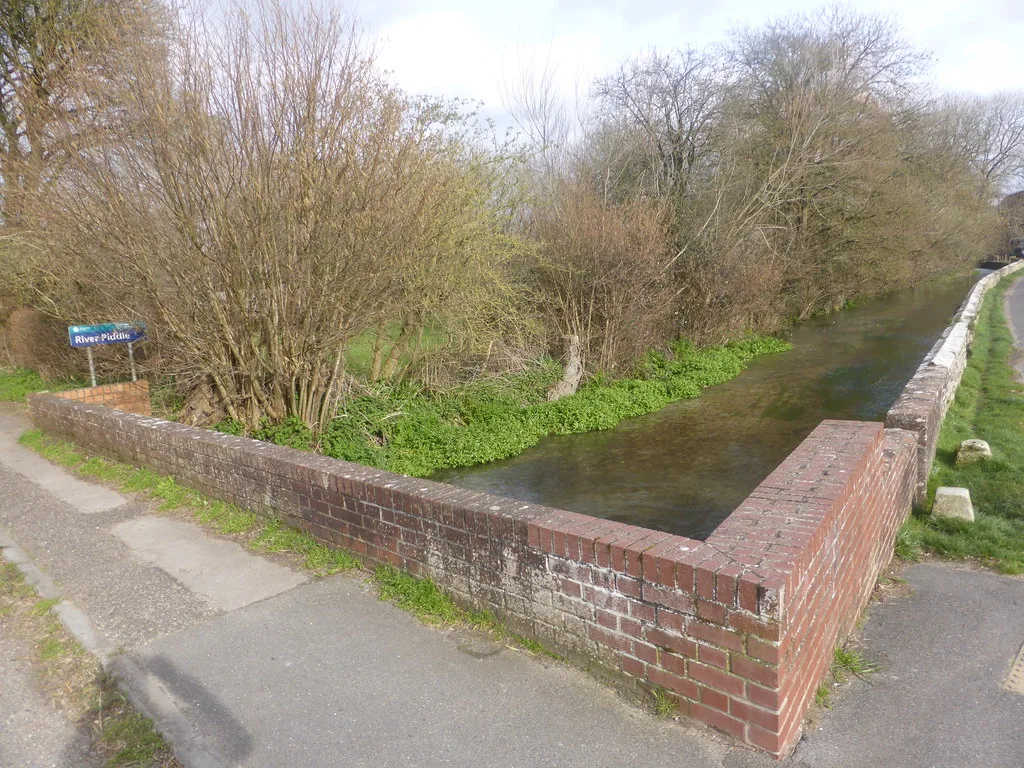
The part of this that most residents never see is happening in the Piddle valley. Wessex Water runs stream support schemes, pumping water into watercourses when flows drop to trigger levels. As at 6 August it was supporting five Dorset watercourses, putting a combined 20.1 million litres a day into rivers and brooks that would otherwise be running lower.
Three of the five sites feed the River Piddle: Briantspuddle at 9.0 million litres a day, Alton Mill at 1.5 and Morningwell at 0.9. Watergates supports Tadnoll Brook with 7.6 million litres a day and Dewlish supports Devil’s Brook with 1.1.
What it means for you
Find the company name on your bill before you do anything else. Most of Dorset is billed by Wessex Water, so most readers of this page are now covered.
If you are a Wessex Water or South West Water customer, the ban is in force now and neither has an end date. Companies generally deal with a breach by writing to the customer first, rather than going straight to court. If you think you qualify for an exception, check the published list before you apply, because most categories are automatic.
If you are a Bournemouth Water customer, you can legally use a hosepipe today. Whether you should is a different question, and the company is asking you not to. It supplies the most densely populated corner of the county, and it is the only one of the three still saying it has no restrictions.
For everyone, the practical steps are the same and they are unglamorous: fix a dripping loo, which can waste hundreds of litres a day unseen; water plants in the evening rather than the middle of the afternoon; use a watering can rather than a sprinkler; and put a butt on a downpipe before the autumn rain arrives rather than after it.
This is the same weather that has stretched the fire service. Dorset and Wiltshire Fire and Rescue declared a major incident on 13 August over the number of wildfires it is attending.
Sources
- South West Water, temporary ban on water use, statutory notice, August 2026
- South West Water, hosepipe ban
- South West Water, Lyme Regis drinking water
- Wessex Water, hosepipe ban and its statutory notice for temporary ban on water use
- Wessex Water, water resources, July 2026 update and stream support
- Bournemouth Water
- Water Use (Temporary Bans) Order 2010
Have your say