
Wessex Water wants to stop Dorset businesses using hosepipes for vehicle washing, cleaning and watering. The decision now rests with the Environment Secretary.
Wessex Water has asked the government for powers to stop businesses across its area using mains water for jobs such as washing vehicles, cleaning buildings and watering plants. It would be the next step after the hosepipe ban on households, which has been in force since 18 August.
The company applied to the Environment Secretary for a drought order under the Water Resources Act 1991. Its statutory notice, dated 6 November and carried in the Dorset Echo, says the order would cover “the whole Wessex Water supply area”. That includes most of the Dorset Council area. Objections closed on 13 November, and the decision now sits with the Secretary of State.
Overview
- Who it would hit: businesses, public bodies, charities and other non-household customers supplied by Wessex Water. Households are already under the hosepipe ban and are not affected further.
- When: only if the Environment Secretary grants the order. No start date has been set.
- How long: up to six months, and it could be lifted as early as January after a wet winter.
- Status on 18 November: applied for, objections closed, no decision published.
What would be banned
The order would let Wessex Water stop non-household customers using mains water for:
- watering outdoor plants on commercial premises with a hosepipe
- filling or maintaining a non-domestic swimming or paddling pool (the company’s business page adds hot tubs)
- filling or maintaining a non-domestic pond with a hosepipe
- cleaning non-domestic premises with a hosepipe
- cleaning the windows of a non-domestic building with a hosepipe
- operating a mechanical vehicle washer
- cleaning any vehicle, boat, aircraft or railway rolling stock with a hosepipe
- cleaning industrial plant with a hosepipe
- suppressing dust with a hosepipe
- operating a flushing cistern in a building that is unoccupied and closed
There are exemptions for health and safety, animal welfare and the environment. A pond where fish or other aquatic animals are being reared is one of them.
A small business exemption has been requested
Wessex Water has also asked the Secretary of State to approve an extra exemption for small businesses that could not keep trading under the ban. The test it proposes uses the legal definitions of a small business:
| Micro business | Small business | |
|---|---|---|
| Annual turnover | Up to £1 million | Up to £15 million |
| Balance sheet total | Up to £500,000 | Up to £7.5 million |
| Average staff | Fewer than 10 | Fewer than 50 |
The exemption would only cover water that is “directly and reasonably necessary” for the business’s main activity, where the ban would stop that activity or cut it to “a materially reduced extent”. Other water use by the same business would still be banned. That is set out in the draft order in the application.
Why the company says it needs it
The application blames an exceptional shortage of rain that began in March. The Environment Agency called April to September 2026 the third driest period in its Wessex records, which go back to 1871, with 43 per cent of the long-term average rainfall.
Wessex Water’s reservoirs held 28 per cent of their capacity in the week starting 2 November. That was up from 23.4 per cent in the week of 19 October, after heavy rain.
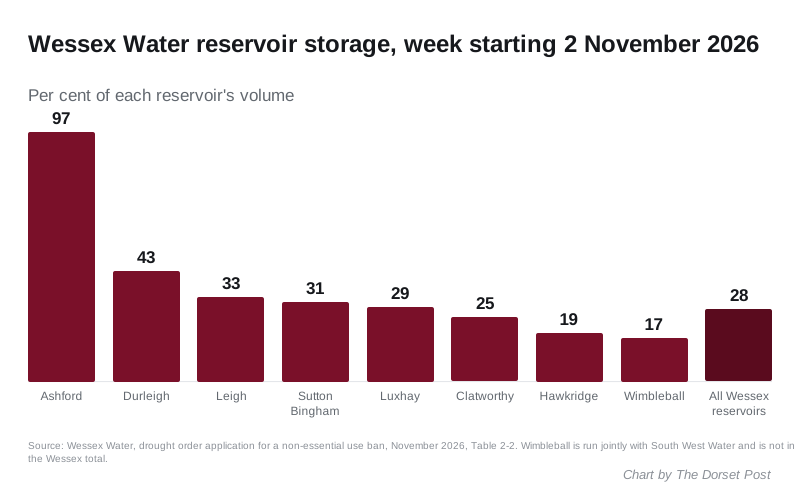
The reservoirs are in Somerset and on its border with Dorset. Sutton Bingham, just south of Yeovil, was at 31 per cent. About three quarters of the water Wessex supplies comes from underground sources instead, and the application says groundwater levels have fallen through the summer. If dry weather continued, the company says, the reservoirs could run empty, affecting about a quarter of its supply area.
The company’s own figures say the risk has eased
The application is frank about one change. When Wessex Water first modelled the ban in late October, it expected emergency “Level 4” restrictions, such as severe pressure cuts, under its two driest rainfall scenarios. Its updated forecasts, made after the October rain, say the reservoirs would not reach that point.
The chance of needing this ban to hold off emergency restrictions “in the coming weeks and months” is now “effectively zero”, the application says. The company still wants the order, arguing it would help the reservoirs refill before next summer and make emergency measures less likely in 2027.
It expects the ban would save about 1 per cent of the water it supplies in winter. Its drought plan assumed 2 per cent, or 8 million litres a day, but those savings were for the summer, when far more of these jobs are done.
What it means for you
- If you run a business in Dorset, check who your water wholesaler is. Wessex Water supplies most of the county, but not Bournemouth Water’s or South West Water’s areas. Wessex says it will tell retailers, councils and MPs, put notices in local papers and update its business page if the order is granted.
- If you think your business would qualify as small, look at the turnover, balance sheet and staff limits above. The exemption has only been asked for, not granted.
- If you are a household customer, nothing changes. The hosepipe ban “will remain in place across the region until further notice”, Wessex Water says.
Dorset Council, the Dorset Association of Local Councils and Dorset Wildlife Trust were among the bodies Wessex Water notified of the application, according to its consultation list.
Sources: Wessex Water’s statutory notice of application (6 November 2026), its business customers page and its drought order application (November 2026), all read on 18 November 2026.
Have your say