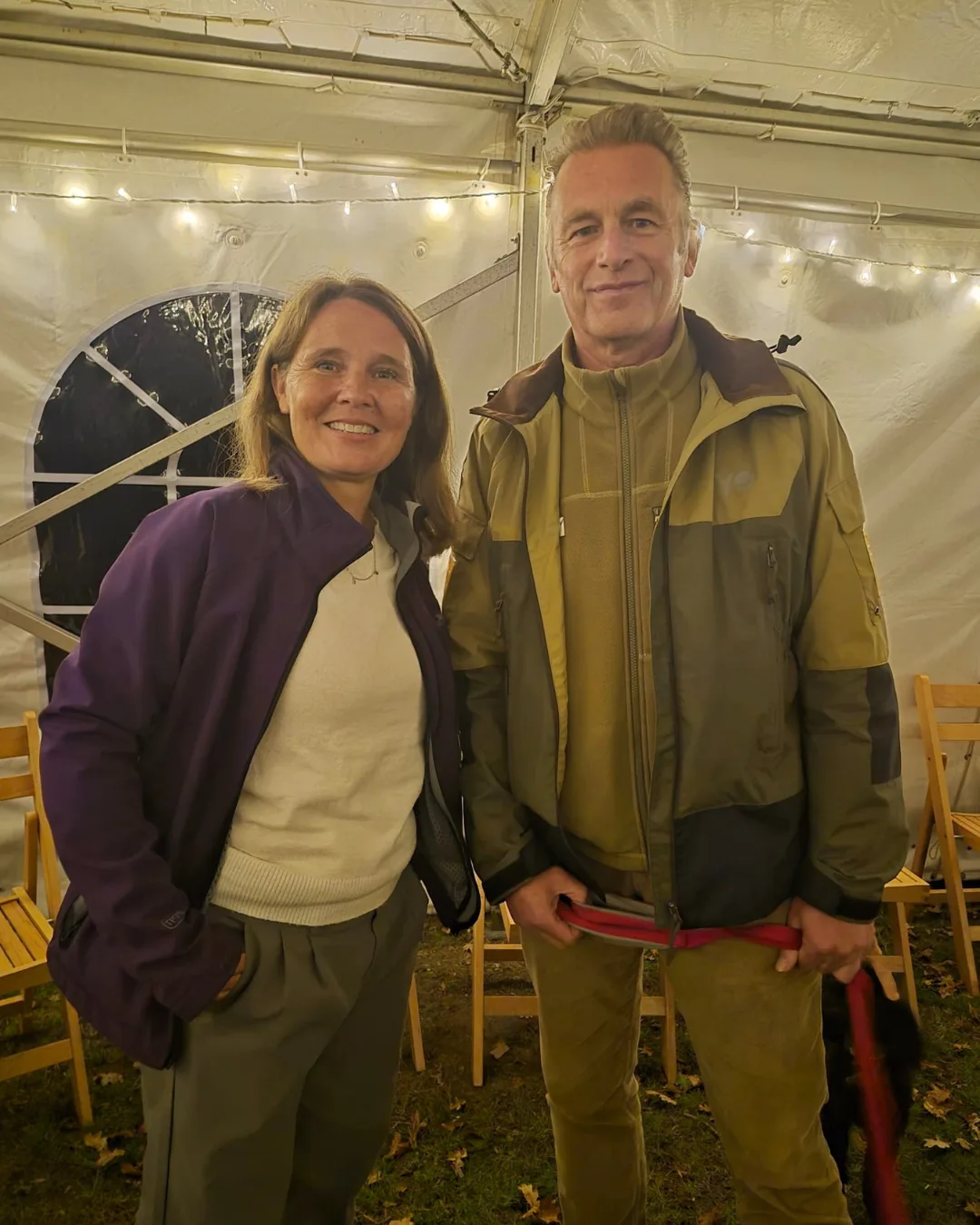

Dorset Wildlife Trust's chief executive told a Broadstone screening only around 15% of rivers are in good health. Vikki Slade MP wants more groups to host it.
Only around 15% of Dorset’s rivers are in good ecological condition, the chief executive of Dorset Wildlife Trust told a community screening of a climate film in Broadstone, as the area’s MP called on local groups to show it in their own halls.
Vikki Slade, Liberal Democrat MP for Mid Dorset and North Poole, hosted a free public showing of The People’s Emergency Briefing at Broadstone Liberal Hall on Friday evening, 30 October, followed by a facilitated discussion with the audience.
The 50-minute film is a public version of the National Emergency Briefing held at Westminster Central Hall in November 2024, when, according to Ms Slade’s office, more than 1,200 MPs, peers and leaders from business, culture, faith, sport and the media gathered to hear experts set out the UK’s exposure to climate and nature risks. Chris Packham introduced that briefing, which covered what climate and nature breakdown means for food security, public health, infrastructure, the economy and national security, and the actions that could reduce the risks.
The film launched nationwide on 7 April and is being screened by communities across the UK. Bournemouth saw it at the Pavilion on 20 October in a free showing organised with Dorset Wildlife Trust.
“The climate and nature crisis is on our doorstep”
Brian Bleese, chief executive of Dorset Wildlife Trust, was in the Broadstone audience. “I’ve seen this film before and I find it no less hard-hitting every time I watch it,” he said. “It fills me with both dread and hope. Dread at the scale of the challenges we face, but hope that we still have the opportunity to make meaningful changes if we act now.”
Speaking after the showing, he pointed to changes already visible in the county.
“The climate and nature crisis is on our doorstep. We see it in the declining abundance of wildlife, from starlings disappearing from our skies to changes in our estuaries and coastline. Only around 15% of our rivers are currently in good ecological condition.
“Yet there is so much that can be done locally. I’d love Dorset to become an exemplary county, a beacon for environmental action that inspires others across the country.”
The trust is currently raising £25,000 to spread rewilding across more of Dorset.
MP asks community groups to host a screening
Ms Slade said change has to begin close to home. “Combatting climate change starts locally. If every one of us takes a single step forward and makes a positive change, together we can make a real difference,” she said. “I would encourage people not only to engage with their local MPs, but also to engage with their councils and support parliamentary petitions calling for stronger climate action.”
She added: “I have seen this film several times now and I am pleased it creates the space to have honest conversations about what climate and nature change means for our communities. It also highlights the positive actions that can improve people’s lives while addressing these challenges.
“I hope this film can be shown to as many people across Dorset as possible and would encourage local community groups to consider hosting a screening. Building understanding and encouraging constructive dialogue is an important step towards the action that the science tells us is needed.”
The Broadstone evening also promoted a parliamentary call for the Government to hold its own emergency briefing to the nation: introduced by the Prime Minister, delivered by independent experts, and broadcast live across television, radio and social media.
What the film covers
The film has leading scientists and experts setting out the risks from climate change and nature loss, and the actions that can be taken to reduce them, with time built in for audiences to talk about what that means where they live.
Chris Packham, who presents it, said: “I’d encourage people everywhere to attend a screening of The People’s Emergency Briefing. It creates exactly the kind of honest local conversation we now urgently need, both about what these changes mean where we live, and about what we can do together to address them.”
Have your say